Interior Wall Dampness Inspection
Inspect wall patches, peeling paint, bubbling, discolouration, powdery deposits, damp corners and damaged plaster in bedrooms, halls, living rooms, corridors, stores and other occupied spaces.

Home Inspection 360 provides dampness inspection in Chennai for independent houses, apartments, flats, villas, residential buildings, hospitals, clinics, offices, factories, warehouses, shops, company buildings and other commercial or institutional properties. We inspect visible signs of wall dampness, ceiling moisture, water seepage, rainwater entry, plumbing-related leaks, crack-associated damp patches, mould-like growth and moisture damage.
Our inspection combines visual assessment with suitable non-invasive checks using a thermal imaging camera and moisture meter where appropriate and available. We check affected and nearby areas to help document symptoms and narrow down possible moisture sources. The inspection scope depends on access, site conditions, safety and permission.
Visual dampness assessment · Thermal imaging where suitable · Moisture meter checks · Photo documentation
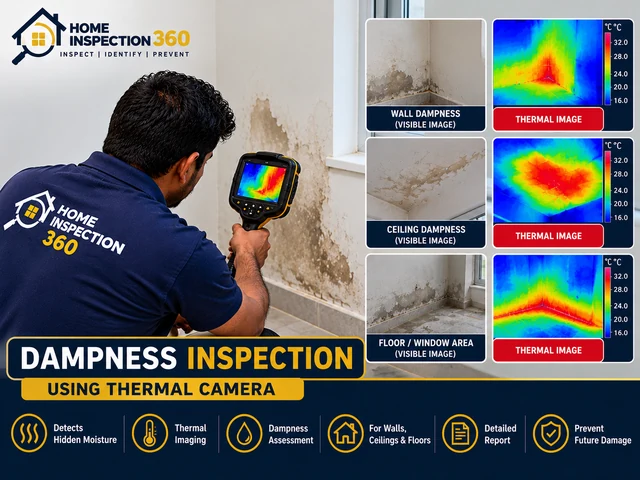
Damp patches may appear far from the original source of water. Moisture can travel through cracks, masonry, concrete slabs, plumbing routes, joints, external walls and floor or wall junctions before becoming visible as peeling paint, bubbling, stains, salt deposits, plaster damage or mould-like growth. Rainwater entering through an external wall or terrace may also show up inside a room after a delay.
Our dampness inspection documents visible symptoms and checks accessible surfaces and nearby areas for possible contributing factors. A visual inspection, thermal pattern or moisture reading alone cannot always confirm the exact source. Concealed leaks or waterproofing defects may require additional tests by an appropriate specialist.
Dampness can come from rainwater ingress, leaking pipes, bathroom or kitchen seepage, cracks or rising damp. Home Inspection 360 inspects walls, ceilings and other areas using visual checks, a thermal camera and a moisture meter where suitable, then documents the visible conditions and recommends next steps. Repair work is separate unless specifically agreed.
We assess different visible dampness and seepage symptoms in residential, commercial, industrial and institutional buildings. The exact checks are based on the reported problem and the areas safely accessible during the visit.
Inspect wall patches, peeling paint, bubbling, discolouration, powdery deposits, damp corners and damaged plaster in bedrooms, halls, living rooms, corridors, stores and other occupied spaces.
Document ceiling stains, wet patches, paint failure, plaster deterioration and moisture symptoms that may be associated with a bathroom, terrace, upper floor, roof or concealed service line above.
Check accessible internal and external surfaces for signs that may relate to rainwater entering through exterior cracks, window edges, parapet junctions, roof areas, terrace interfaces or damaged sealants.
Inspect walls beside bathrooms, ceilings below wet areas, floor junctions and accessible plumbing points for moisture symptoms potentially associated with water use, pipe fittings, tile joints or waterproofing defects.
Check areas around sinks, taps, drain connections, washing-machine points, utility spaces, pantry counters and water-use zones for visible dripping, swollen cabinets, wall stains and damp flooring.
Record visible cracks with nearby dampness, staining or paint deterioration. A crack may allow water entry, but dampness can also have another source; significant or moving cracks should be assessed by a qualified structural engineer.
Inspect accessible water supply lines, exposed pipework, joints, valves and connection points for dripping, corrosion or nearby moisture damage. Concealed plumbing may need pressure testing or specialist leak detection.
Check lower wall sections, skirting, floor edges and ground-contact areas for recurring dampness, salt deposits or damaged finishes. Confirming rising damp or its cause may require further investigation.
Inspect accessible external walls for cracks, open joints, deteriorated coatings, water marks and other defects that may allow moisture to enter. High-level and unsafe locations are not accessed without suitable safe access.
Check visible terrace and roof-related symptoms, parapet junctions, drain surroundings and ceiling areas below where access is available. Concealed waterproofing layers cannot be certified through surface inspection alone.
Inspect accessible frame edges, sills, sealants and wall junctions for gaps, staining and deterioration that may be linked to rainwater entry or moisture trapped around openings.
Document visible mould-like growth, dark patches, musty odours and damp corners. The report can recommend investigation of the moisture source; laboratory identification and specialist mould remediation are separate services.
Check accessible surfaces around wash areas, floor drains, cleaning sinks, laundry points and other water-use locations for recurring wetness, drainage-related symptoms and deterioration of nearby finishes.
Record moisture staining, cracks, rust marks or visible concrete deterioration on accessible structural surfaces. Exposed reinforcement, substantial cracking or suspected structural damage should be referred to a qualified structural engineer.
Where suitable and available, compare affected and nearby surfaces using a thermal camera and moisture meter. Readings are supporting indicators and do not independently prove a leak, identify every concealed source or confirm a material diagnosis.
Document peeling paint, blistering, soft or damaged plaster, discolouration, efflorescence, swollen woodwork and other visible finishes affected by moisture.
Different buildings have different water-use patterns, wall systems, roof arrangements and service routes. We tailor the accessible visual checks to the property type and symptoms reported. Dampness may be related to rainwater entry, plumbing, drainage, condensation, ground moisture, damaged sealants or other building conditions; the source should not be assumed from appearance alone.
Thermal imaging displays surface temperature differences that may help identify areas for closer investigation. Sunlight, ventilation, materials, air-conditioning and other conditions can affect the pattern, so thermal images must be interpreted with visual observations and other evidence.
Moisture readings can help compare selected surfaces. Results vary by material and instrument and do not independently identify the water source or prove a concealed pipe leak.
We document visible symptoms and inspect accessible nearby areas where relevant. Pressure tests, controlled water tests, plumbing investigation, opening-up work or structural assessment may need to be arranged separately.
Depending on the agreed service, the report may include property details, areas inspected, photographs, visible defects, moisture observations, thermal-image observations where obtained, access limitations and recommended next steps.
Destructive testing, concealed pipe tracing, pressure testing, laboratory mould analysis, structural certification, waterproofing membrane certification and repair work are not automatically included. These must be discussed and agreed separately.
Home Inspection 360 can prepare an inspection summary based on the agreed scope. The report should distinguish directly observed defects, instrument readings and suspected causes that require further verification.
Photos of accessible damp areas with location-specific notes.
Relevant moisture readings and comparison notes where readings are taken.
Thermal patterns recorded where imaging is used, with appropriate interpretation limits.
Possible contributing areas based on the observations, without unsupported guarantees about the exact source.
Suggested plumbing, rainwater-entry, drainage, waterproofing or specialist checks where required.
Areas not accessed, permissions needed and additional tests that may be appropriate.
We accept enquiries for wall dampness inspection, ceiling seepage inspection, rainwater dampness, crack-associated moisture, bathroom and kitchen dampness, water leakage symptoms and moisture damage across Chennai, subject to availability, site access and safety requirements.
We serve residential, commercial, industrial and institutional property enquiries. Contact us to confirm service coverage, charges, scope and appointment availability for your exact location.
T. Nagar, West Mambalam, Nungambakkam, Egmore, Kilpauk, Chetpet, Kodambakkam, Vadapalani, Ashok Nagar and Saidapet.
Adyar, Besant Nagar, Thiruvanmiyur, Velachery, Madipakkam, Nanganallur, Medavakkam, Pallikaranai and Perungudi.
Porur, Valasaravakkam, Virugambakkam, Mogappair, Ambattur, Avadi, Poonamallee and Iyyappanthangal.
Thoraipakkam, Karapakkam, Sholinganallur, Navalur, Siruseri and nearby residential and commercial locations.
Palavakkam, Kottivakkam, Neelankarai, Injambakkam, Akkarai, Uthandi and nearby areas.
Tambaram, Chromepet, Pallavaram, Selaiyur, Sembakkam, Perungalathur, Vandalur and nearby areas.
Enquiries from nearby districts may also be considered, subject to the exact location and availability.
We inspect visible wall and ceiling dampness, rainwater seepage, dampness near bathrooms and kitchens, crack-associated moisture, plumbing-related symptoms, floor-level dampness, window seepage and moisture damage in accessible areas.
Yes, enquiries are welcome for residential, commercial, industrial and institutional properties, subject to availability, safe access and permission from the owner or building management.
We can inspect accessible surfaces for symptoms that may be associated with rainwater entry through walls, windows, roof or terrace junctions and cracks. Additional checks may be needed to confirm the entry route.
Yes. We can inspect accessible nearby walls, ceilings, floors and visible plumbing connections for moisture symptoms. Concealed plumbing and waterproofing defects may require further testing.
We document visible cracks and nearby moisture symptoms. The presence of a crack does not automatically prove it is the source of dampness. Significant, widening or structural-looking cracks should be assessed by a qualified structural engineer.
Suitable tools may be used where appropriate and available. Thermal patterns and moisture readings are supporting indicators and do not independently confirm the moisture source.
No. A visual and non-invasive inspection cannot guarantee detection of every concealed leak. Plumbing pressure tests, controlled water tests, specialist leak detection or opening-up work may be required.
We can document visible mould-like growth and moisture conditions and recommend investigating the moisture source. Laboratory identification and specialist mould remediation are separate services.
Yes, where the affected area is accessible. Checking an upper flat, shared service shaft or neighbouring unit requires permission from the relevant owner, resident or building management.
No, repair work is separate unless specifically agreed. The inspection documents visible conditions and recommends next steps within the agreed scope.
Call or WhatsApp 9600696919 with your locality, property type, affected area, when the dampness appears and whether it changes after rain or water use. Appointment timing, access, scope and charges will be discussed and confirmed by phone before the visit.
Inspection findings describe conditions observed during the visit and within the agreed scope. Moisture readings and thermal patterns require suitable interpretation and may need independent verification. Concealed pipework, waterproofing membranes and inaccessible components cannot necessarily be assessed without additional testing or opening-up work.
This service is not a substitute for structural engineering assessment, plumbing certification, electrical certification, laboratory mould analysis or statutory compliance checks. Suspected structural movement, severe concrete deterioration or exposed reinforcement should be referred to a qualified structural engineer.
Noticing damp walls, ceiling seepage, rainwater entry, cracks with moisture, bathroom or kitchen dampness, mould-like growth or recurring water stains? Contact Home Inspection 360 to discuss a suitable inspection for your home, apartment, villa, hospital, office, factory or commercial building.
Please share your locality, property type, dampness location, whether the issue occurs after rain or water use, and any accessible adjoining area. Booking and appointment timing will be confirmed by phone.
Home Inspection 360 accepts enquiries for dampness inspection across Chennai and nearby districts, subject to appointment availability, property access and the scope agreed before the visit. Localities we cover include:
Locality not listed? See the full service areas page, call or WhatsApp +91 9600696919, or book an inspection.