
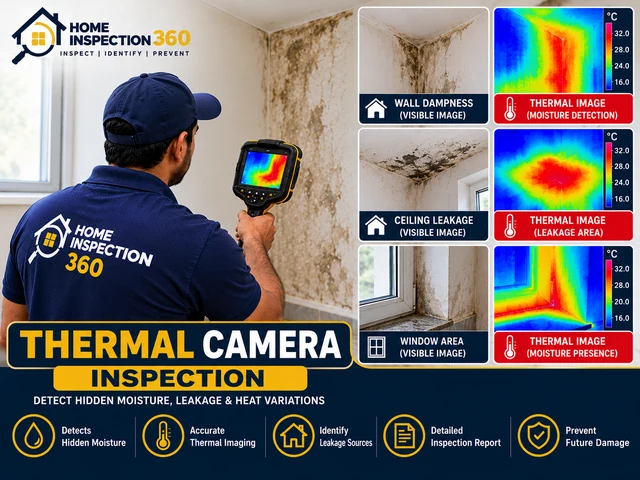
Home Inspection 360 provides thermal camera inspection for apartments, villas, independent houses, rental properties, offices, shops and other accessible buildings. Thermal imaging helps identify unusual surface-temperature patterns that may be associated with hidden moisture, water leakage, dampness, insulation differences or overheating.
We combine thermal images with visual inspection, moisture-meter readings where suitable, plumbing-use history and other available evidence. A thermal image is an investigation aid—not proof of a leak by itself.
Appointments are scheduled after phone confirmation. Access to affected rooms, adjoining areas or the floor above may be needed depending on the complaint.
Noticed damp patches, ceiling dripping, recurring wall stains, suspected concealed pipe leakage, wet flooring, bathroom seepage or unexplained temperature differences? Contact us to discuss the symptoms and arrange a suitable inspection.
A thermal camera shows temperature patterns that may be associated with moisture or hidden water flow, which helps narrow down where to look. It cannot confirm a leak or its source on its own, and some leaks do not produce a clear thermal signature, so thermal findings are cross-checked with moisture readings and other tests.
Inspection scope depends on accessibility, site conditions and the reported problem. Thermal imaging can help guide further checks in the following areas.
Investigate temperature patterns near water stains, damp patches, active dripping, suspected bathroom leakage from the floor above and roof or terrace seepage.
Check areas around vertical damp marks, paint bubbling, plaster damage, window edges, wall joints and suspected concealed water pipes.
Investigate suspected leakage around showers, washbasins, water heaters, plumbing lines, floor edges and walls adjoining wet areas.
Check moisture patterns around sink cabinets, water inlet and drain routes, washing-machine connections and adjoining walls or floors.
Investigate suspected moisture spread beneath or across accessible floor surfaces, skirting, ground-floor rooms and areas below wet zones.
Check accessible areas affected by rain-related seepage, roof junctions, parapet walls, balcony slabs and ceiling patches below.
Use thermal patterns as a supporting clue when investigating hot-water lines, active water flow, concealed pipe routes and suspected pipe leaks.
Assess temperature patterns around AC indoor units, drain routes, nearby walls and ceilings where condensation or moisture is suspected.
Where access is permitted, inspect corridors, service areas, shafts, common bathrooms and affected areas across adjoining floors.
Identify temperature anomalies that may warrant moisture cross-checks around wardrobes, corners, behind furniture and poorly ventilated spaces.
Where specifically included and safely accessible, thermal imaging may highlight unusual heating at accessible electrical components. It does not replace testing by a qualified electrician.
Inspection enquiries for offices, shops, clinics, schools and other properties can be discussed based on the suspected issue and access conditions.
A thermal camera displays surface-temperature differences. The patterns can help guide a closer examination, but they do not directly see through walls or confirm the precise source of a leak.
Record the location, when the issue occurs, recent rainfall, plumbing use, prior repairs and any visible symptoms.
Capture thermal images of relevant walls, ceilings, floors and fixtures under the conditions available at the visit.
Compare thermal patterns with visual signs and moisture-meter readings where suitable. Plumbing or pressure tests may be recommended separately if needed.
Explain areas of concern, limitations, likely next checks and practical recommendations supported by the available evidence.
Depending on the agreed service, the report may include:
We accept enquiries for a range of property types in Chennai, subject to appointment availability and agreed scope.
For multi-storey leakage concerns, access to the flat above, adjoining rooms, service shafts or relevant plumbing areas may be necessary. Please obtain permission before the visit.
Thermal imaging shows surface-temperature patterns; it does not see through walls or confirm moisture, leakage or structural condition by itself. Sunlight, weather, ventilation, surface material, insulation, reflective finishes, water temperature, pipe depth, background temperature and timing can affect results.
Exact leak location may require additional checks such as acoustic leak detection, plumbing pressure testing, meter monitoring, dye testing or controlled opening of finishes. These may be outside the thermal inspection fee unless agreed separately.
Thermal inspection is not a substitute for an electrical safety inspection or structural engineer's assessment. If water is near electrical fittings, or a ceiling/slab appears unstable, keep clear and seek the appropriate qualified professional urgently.
No. It can help identify temperature patterns that may be associated with moisture or water flow, but some leaks do not produce a clear thermal signature. Cross-checking and additional tests may be needed.
Thermal imaging may help investigate certain concealed pipe concerns, especially when temperature differences are present. It cannot guarantee detection or pinpointing for all pipe materials, depths or leak conditions.
Yes, accessible areas can be examined based on the reported problem and agreed inspection scope. Access to adjoining rooms or the floor above may be necessary.
It may help identify temperature patterns in areas worth checking for moisture. Visible mould-like growth and moisture readings should be assessed separately; thermal imaging alone cannot confirm mould species or the cause.
Thermal imaging may identify unusual heating on accessible components when this is included in the agreed scope. Do not open electrical panels or touch live equipment; electrical diagnosis should be performed by a qualified electrician.
Report format and deliverables depend on the service agreed at booking. Please confirm whether thermal images, moisture readings and a written report are included before the inspection.
Call 9600696919 or message us on WhatsApp. Share the location and issue; your appointment will be scheduled after phone confirmation.
Home Inspection 360 accepts enquiries for thermal camera inspection throughout Chennai and surrounding districts, including Kanchipuram, Tiruvallur and Chengalpattu. Visits depend on appointment availability, travel distance, site access and the agreed inspection scope. Call to confirm availability for your exact address.
Locality coverage is indicative, not a guarantee of same-day service. Please call 9600696919 or message on WhatsApp with your address, property type and inspection concern. Every appointment is confirmed by phone before the visit.
Discuss suspected water leakage, hidden moisture, ceiling seepage, damp walls, bathroom leakage or temperature anomalies with Home Inspection 360. Scope and appointment timing are confirmed by phone.
Home Inspection 360 accepts enquiries for thermal camera inspection across Chennai and nearby districts, subject to appointment availability, property access and the scope agreed before the visit. Localities we cover include:
Locality not listed? See the full service areas page, call or WhatsApp +91 9600696919, or book an inspection.